
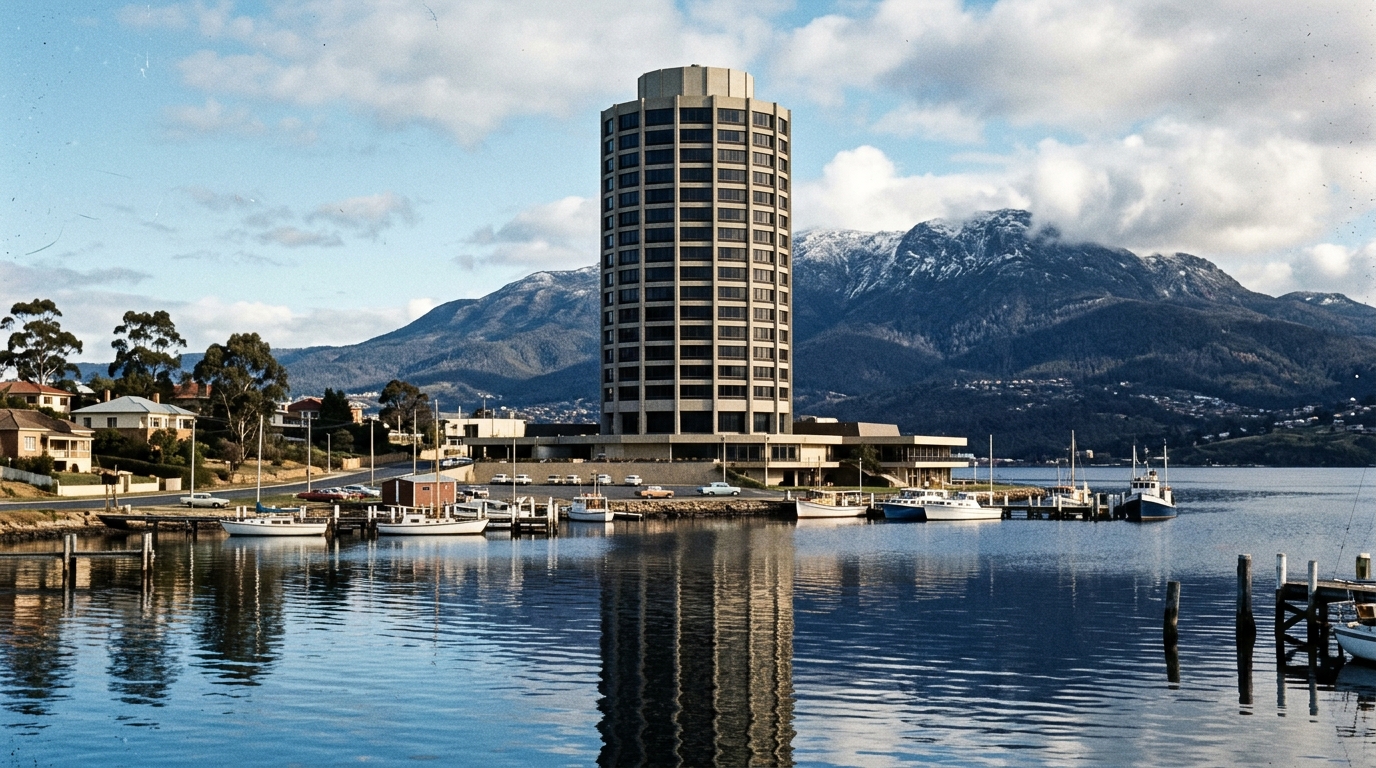
Australia’s bold departure into legal casino gaming: the 1968 Tasmanian referendum, the opening of Wrest Point in 1973, and early boutique resort ventures.
The Tasmanian Gamble: The 1968 Referendum
By the late 1960s, the island state of Tasmania faced economic stagnation, high youth emigration, and declining primary industries. Federal Hotels, led by enterprising developer Sir Peter Lyne and backed by the Tasmanian government, proposed an audacious concept: constructing a premier legal casino resort on the shores of the Derwent River in Hobart to attract mainland and international tourist dollars. Recognizing the moral sensitivity, the state conducted a public referendum on December 14, 1968. Despite ferocious opposition from church coalitions, 53% of Tasmanians voted 'Yes', shattering the national taboo against commercial casino gaming.
February 10, 1973: Wrest Point Opens Its Doors
Designed by celebrated architect Sir Roy Grounds, Wrest Point Hotel Casino opened on February 10, 1973. Featuring Australia’s first revolving tower restaurant perched 64 meters above the harbor, Wrest Point offered European-style roulette, blackjack, baccarat, and craps under strict government surveillance. Operating as a small, refined, British club-style casino, it required formal evening dress and maintained an air of European exclusivity. The venture was an unmitigated commercial success, transforming Hobart into a destination hub and generating substantial tax revenue for the state.
Expanding to the Frontier: Darwin and Alice Springs
Observing Tasmania’s tourism windfall, the Northern Territory Government embraced casino licensing to rebuild its regional economy following the devastation of Cyclone Tracy (1974). In 1979, Don Bradman's cousin Don Bradman Jr. and business partners opened Diamond Beach Casino (later MGM Grand Darwin) on the shores of the Timor Sea. In 1982, Lasseters Casino followed in Alice Springs. These 'First Wave' casinos were intentionally small-scale, situated in remote geographical peripheries, and designed strictly as destination resorts rather than urban mass-entertainment hubs.