
How British penal transportees, illegal two-up circles, and the dawn of thoroughbred horse racing forged Australia's enduring cultural fascination with wagering.
The British Legacy and Class-Based Prohibition
When the First Fleet established the penal settlement at Sydney Cove in 1788, British gambling traditions were immediately transplanted onto Australian soil. Colonial authorities initially instituted a dual-class moral standard: while betting among wealthy pastoralists, military officers, and senior administrators in private gentlemen’s clubs was viewed as an honorable pastime of character and status, working-class and convict wagering was fiercely criminalized. Convicts frequently wagered their food rations, uniform garments, and tools on makeshift games of cards, dice, and illegal blood sports like cockfighting and ratting.
The Rise of Two-Up and Working-Class Solidarity
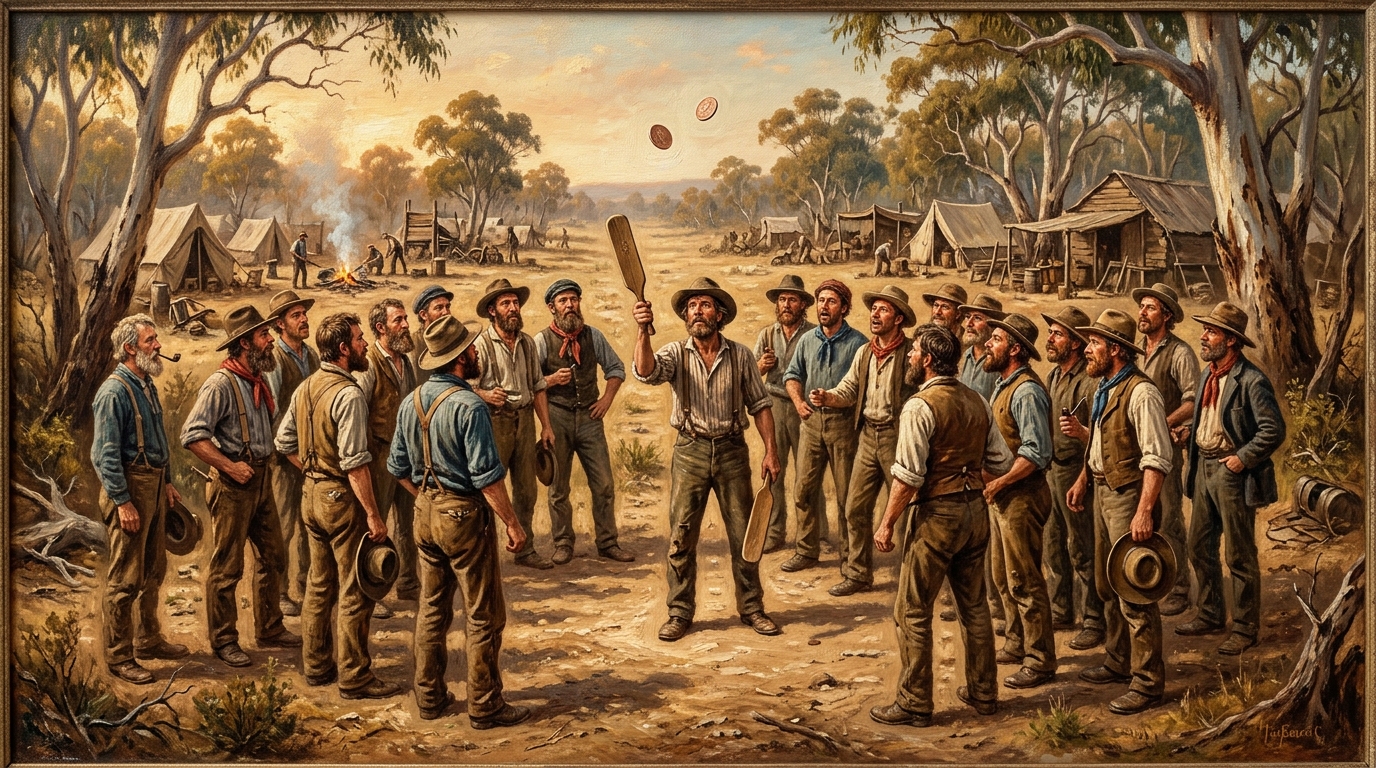
Among the lower classes and bush pioneers, 'two-up' (the spinning of two pennies from a small wooden kip) evolved into an iconic national pastime. Despite heavy police surveillance and periodic crackdowns under colonial vagrancy laws, illegal two-up 'schools' operated in back alleys, timber yards, and outback mining camps. The egalitarian ethos of two-up—where money was the only equalizer and social hierarchy was suspended—ingrained a distinctive egalitarian attitude toward luck and chance that would become a hallmark of Australian identity.
Thoroughbred Racing and the Melbourne Cup Tradition
Because horses were essential for transport and communications throughout the burgeoning continent, equine wagering gained social respectability far earlier than table games. By 1810, organized race meetings were formally sanctioned in New South Wales. In November 1861, the Victoria Turf Club conducted the inaugural Melbourne Cup. Won by Archer across two consecutive years, the two-mile handicap swiftly captured the national consciousness, establishing an annual ritual that famously 'stops a nation' and laid the foundation for government-regulated wagering.