How New South Wales created the world's most unique decentralized machine gaming ecosystem inside non-profit registered clubs and RSLs.
The Cahill Government and Legislative Breakthrough
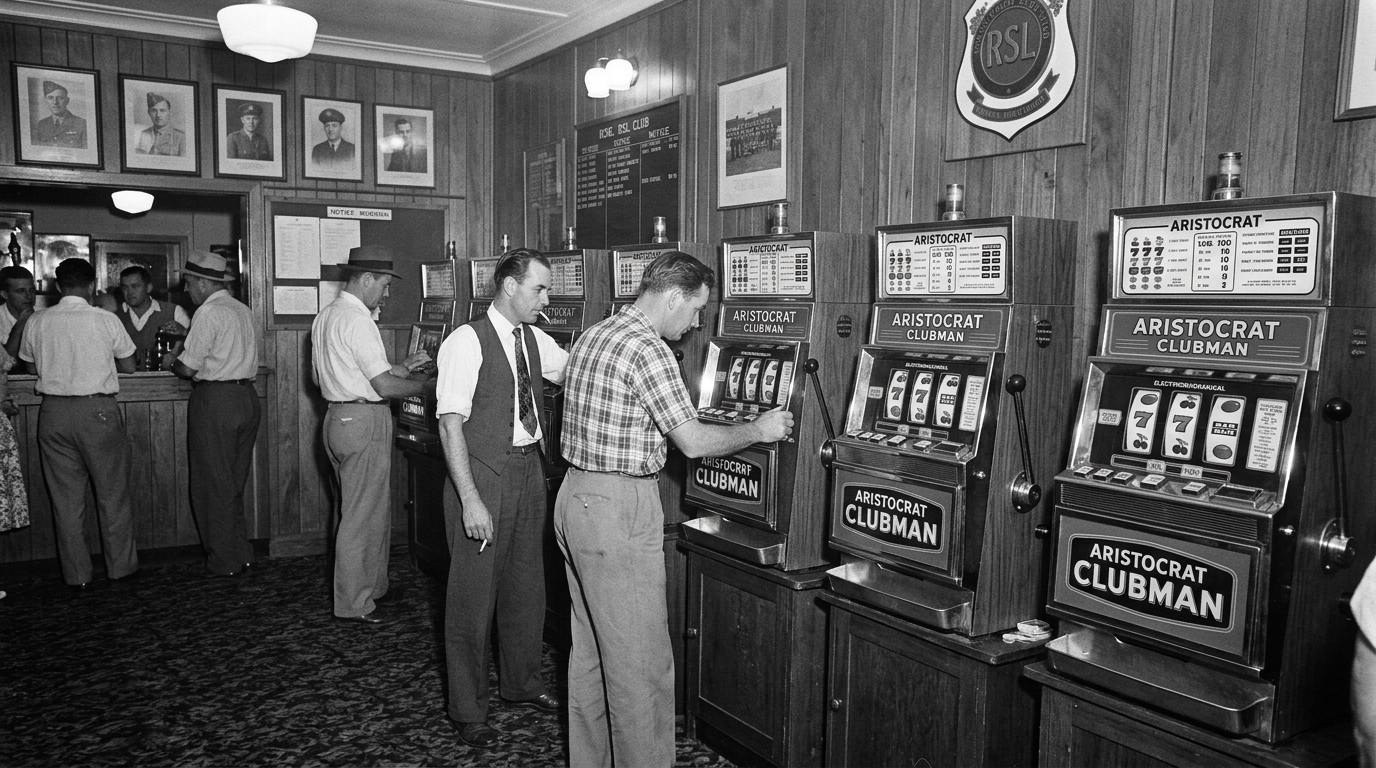
Following the Second World War, hundreds of community clubs—notably Returned and Services League (RSL) branches, bowling clubs, and workers' leagues—operated imported American mechanical slot machines in a legal grey area with tacit police tolerance. In 1956, New South Wales Premier Joseph Cahill took the radical step of formalizing this reality by passing the Gaming and Betting (Poker Machines) Act 1956. Crucially, the legislation granted exclusive operating rights solely to registered, non-profit mutual clubs, expressly barring commercial hotels and private corporations.
The Architecture of the Registered Club Ecosystem
The statutory requirement that club gaming profits must not accrue to individual owners fundamentally reshaped Australian suburban life. Clubs channeled their vast poker machine earnings into lavish member facilities: subsidised five-star buffets, Olympic swimming pools, bowling greens, community sports teams, and concert auditoriums hosting international entertainment. Between 1956 and the mid-1970s, NSW clubs evolved from modest drinking holes into veritable entertainment palaces, establishing pokies as a routine, accessible leisure habit.
The Rise of Domestic Gaming Manufacturing: Aristocrat
The sudden legal demand for gaming machines catalyzed Australia’s domestic engineering industry. In 1953, visionary entrepreneur Len Ainsworth took over his family's dental equipment manufacturing business and founded Aristocrat Leisure. Aristocrat engineered robust electromechanical slot cabinets—beginning with the 'Clubman' (1953) and the celebrated 'Nevada' (1956)—specifically designed for intense continuous club play. Aristocrat would grow from a Sydney workshop into one of the top three global gaming manufacturers, pioneering modern video slots and multi-line bonus features worldwide.