
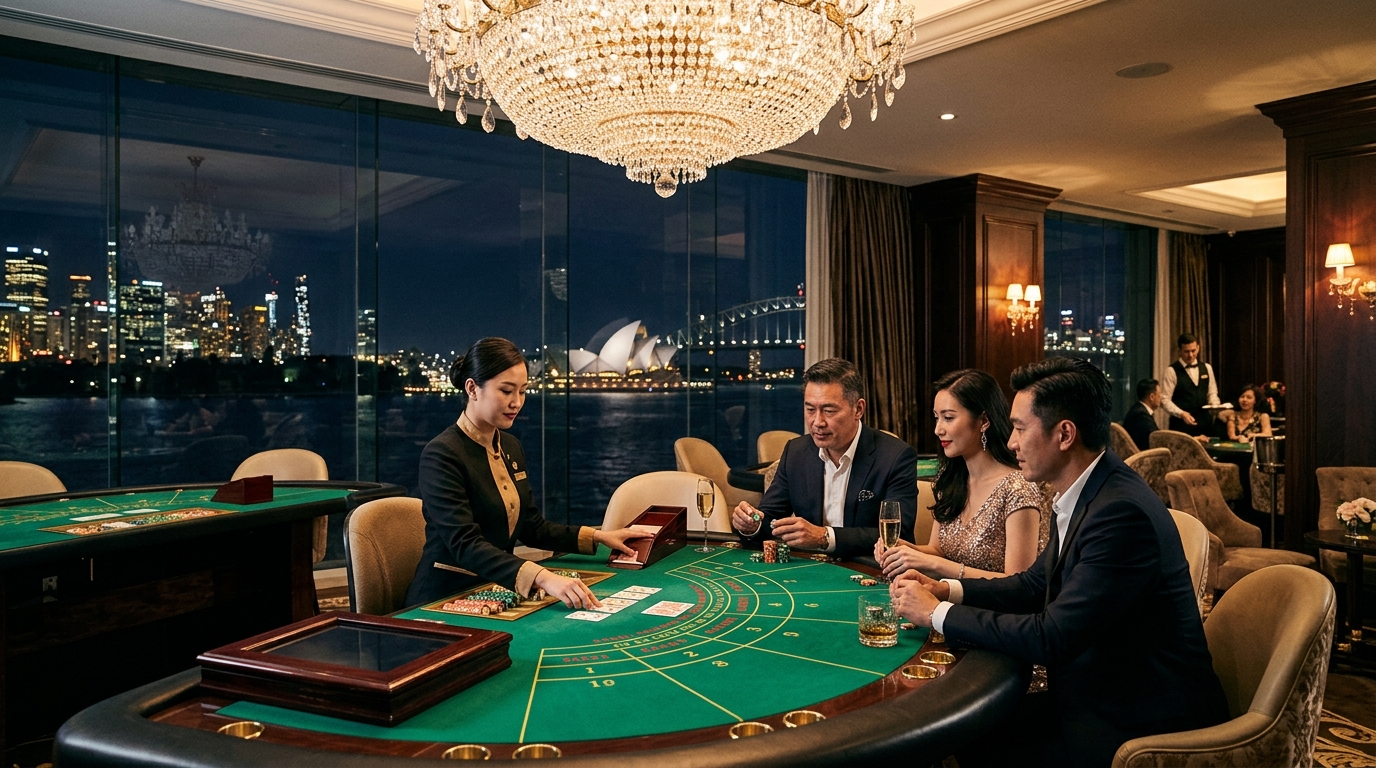
How geographic proximity to Southeast Asia transformed Crown Melbourne, The Star Sydney, and Burswood Perth into premier international VIP baccarat hubs.
The Strategic Pivot Toward the Asia-Pacific Market
While Australian casinos derived the majority of their day-to-day baseline revenue from local domestic players (the 'grind' market), operators recognized that exponential growth lay in attracting international premium players ('high rollers') from China, Hong Kong, Singapore, and Indonesia. By virtue of being in the same timezone and offering clean air, political stability, luxury golf resorts, and world-class culinary dining, Australia positioned itself as a premier Western gaming retreat for Asia's burgeoning billionaire class.
Baccarat in Private Salons: The Mechanics of VIP Gaming
In the palatial private salons of Crown’s Mahogany Room and Star Sydney’s Sovereign Room, traditional Western table games like blackjack and roulette were completely eclipsed by non-commission baccarat. Premium players wagered hundreds of thousands of dollars per hand. To capture this lucrative demographic, casinos operated private corporate luxury jets, dedicated penthouse suites, personal concierges, and tailored rebate programs that reimbursed travel expenses based on betting turnover.
The Junket System and Subsequent Vulnerabilities
To navigate Chinese currency export restrictions, Australian integrated resorts relied heavily on Macau-based junket operators. Junket promoters recruited wealthy VIP players, extended cross-border credit, collected gaming debts, and organized lavish Australian itineraries in exchange for a percentage cut of player turnover. By the mid-2010s, VIP junket volume accounted for billions in annual turnover, providing lucrative state tax windfalls but exposing Australian operators to severe anti-money laundering and corporate governance vulnerabilities.